

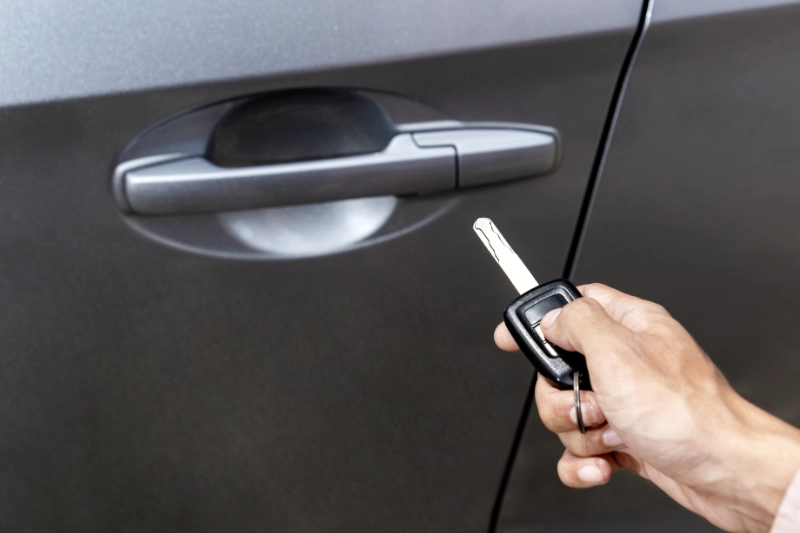
Car Key Replacement in Pretoria: Costs, Options & What to Expect
Losing your car key, snapping it off in the ignition, or having a remote fob stop working is more common than most drivers expect — and it always seems to happen at the least convenient time. Here's a clear breakdown of what affects the cost, what your options are, and what actually happens when a mobile auto locksmith comes to help.
In this guide:
- What affects the cost of car key replacement
- Types of car keys and what they involve
- Dealer vs mobile locksmith: what's the difference?
- What to expect when a locksmith arrives
- Key broken off in the ignition or door?
- What if your car is older or has no chip?
- How to avoid getting caught out again
- Does insurance cover a lost or stolen car key?
- Frequently asked questions
What Affects the Cost of Car Key Replacement
Losing a car key tends to trigger a slightly different kind of stress to a house key — you're often stranded somewhere inconvenient, on a schedule, and unsure what the fix will actually cost. There's no single flat price for car key replacement, because it depends on several factors:
- Vehicle make and model — some manufacturers use more complex transponder or rolling-code systems than others.
- Key type — a basic cut key costs far less than a programmable remote or smart key.
- Whether programming is required — modern keys often need to be electronically paired with your vehicle's immobiliser system.
- Time of day — after-hours and emergency callouts typically carry a surcharge, the same as any emergency locksmith service.
- Whether you have a spare key already — cutting a duplicate from an existing key is usually far cheaper than programming a replacement from scratch.
A reputable auto locksmith will assess your specific vehicle and give you a firm price before doing any work, rather than a vague estimate.
Types of Car Keys and What They Involve
- Standard metal keys — the simplest type, cut mechanically to match your lock. Fast and inexpensive to duplicate.
- Transponder keys — look like a normal key but contain a chip that communicates with your car's immobiliser. These need to be programmed to your specific vehicle, not just cut.
- Remote/fob keys — combine a physical key with remote locking and alarm functions. Both the mechanical cut and the remote signal need to work together.
- Smart keys / keyless entry — the most advanced option, allowing keyless start and proximity unlocking. These generally require dealer-level or specialist programming equipment.
Most modern vehicles on South African roads fall into the transponder or remote category, which is where a specialist auto locksmith — rather than a generic hardware store key cutter — becomes essential.
Dealer vs Mobile Locksmith: What's the Difference?
Car dealerships can order and program replacement keys, but this usually means booking your vehicle in, waiting for parts to arrive, and paying dealer labour rates — sometimes over several days. A specialist mobile locksmith carries key-cutting and programming equipment on the vehicle itself, meaning most replacements can be handled on site, often the same day, without your car ever leaving your driveway or the roadside.
The trade-off is that some very new or unusual models may still require dealer-level diagnostic access — a transparent locksmith will tell you upfront if that's the case rather than attempting a job they can't actually complete.
What to Expect When a Locksmith Arrives
A typical car key replacement call-out looks like this:
- The technician confirms your vehicle's make, model and year, and verifies proof of ownership (registration papers or similar).
- They assess whether a cut-only key, a transponder key, or a full remote/fob replacement is needed.
- They cut and, if required, program the new key on site using diagnostic equipment connected to your vehicle.
- They test the key fully — ignition, remote lock/unlock, and alarm functions — before considering the job complete.
Proof of ownership matters here: a professional locksmith should always confirm you're entitled to a key for the vehicle before cutting one, the same way a residential locksmith would confirm you're the homeowner before a lockout.
Key Broken Off in the Ignition or Door?
A snapped key is a different problem to a lost one — the broken piece is still physically inside the lock or ignition barrel, and needs to be extracted carefully to avoid further damage. Don't try to dig it out with tweezers or a pin; this often pushes the fragment deeper or damages the internal pins. This is a job for a trained technician with the right extraction tools, followed by a full assessment of whether the barrel itself is still in good working order or needs replacing.
What If Your Car Is Older or Has No Chip?
Not every vehicle on the road uses transponder or remote technology. Older cars, some entry-level models, and older bakkies often use a purely mechanical key with no electronic component at all. If that's your situation, replacement is usually the simplest and cheapest scenario:
- A locksmith can cut a new mechanical key directly from the lock cylinder if no working key exists at all, without needing to source or program a chip.
- If you have any old, even non-working, key as a reference, duplication is faster still.
- Because there's no immobiliser to pair with, the job is typically limited to cutting and testing the key in the door and ignition locks.
It's still worth confirming with your auto locksmith before the callout whether your specific model uses a chip or not — some older-looking vehicles were fitted with early transponder systems that aren't obvious from the key's appearance alone.
How to Avoid Getting Caught Out Again
- Keep a spare key at home or with someone you trust, rather than relying on a single key for daily use.
- Get a spare cut proactively rather than waiting for an emergency — it's almost always cheaper than an urgent replacement.
- If your remote battery is getting weak, replace it before it fails completely, rather than after you're stranded.
- Save a trusted nearest locksmith contact in your phone so you're not searching under pressure.
Does Insurance Cover a Lost or Stolen Car Key?
Some comprehensive motor insurance policies include cover for key replacement, particularly where the vehicle itself was stolen along with the key, or where the key was stolen in a break-in. Coverage varies significantly between insurers and policies, so it's worth checking your specific policy wording rather than assuming either way. A few practical points:
- Keep any invoice from your locksmith — most insurers will want proof of the cost and the work done to process a claim.
- If the key was stolen (rather than simply lost), report it to the police first; most insurers require a case number for a claim.
- If your vehicle uses a keyless or smart key system, ask your locksmith to confirm any old keys have been deregistered from the vehicle as part of the replacement — this matters for both security and, in some cases, insurance compliance.
Frequently Asked Questions
Can a mobile locksmith program a key for any car?
Most makes and models, yes. Some very new or specialised vehicles may still require dealer-level access — a good locksmith will confirm this before you book.
How long does a car key replacement take?
A straightforward cut-and-program job usually takes 30 to 60 minutes on site, depending on the vehicle.
Do I need to prove I own the car?
Yes, and you should expect this. It protects you against key duplication fraud as much as it protects the locksmith.
Is it cheaper to duplicate a key than replace a lost one?
Almost always. If you have any working key or even an old one, duplication is significantly faster and cheaper than programming a replacement from nothing.
What if my car key is lost, not just misplaced?
If you're confident the key is genuinely gone rather than mislaid, it's worth having your vehicle's existing codes reprogrammed as part of the replacement, so the lost key can no longer start or unlock the car.
Stranded With No Car Key?
Our mobile auto locksmiths cut and program replacement car keys on site across Pretoria, Centurion and Johannesburg.


 Mobile unit, Pretoria