

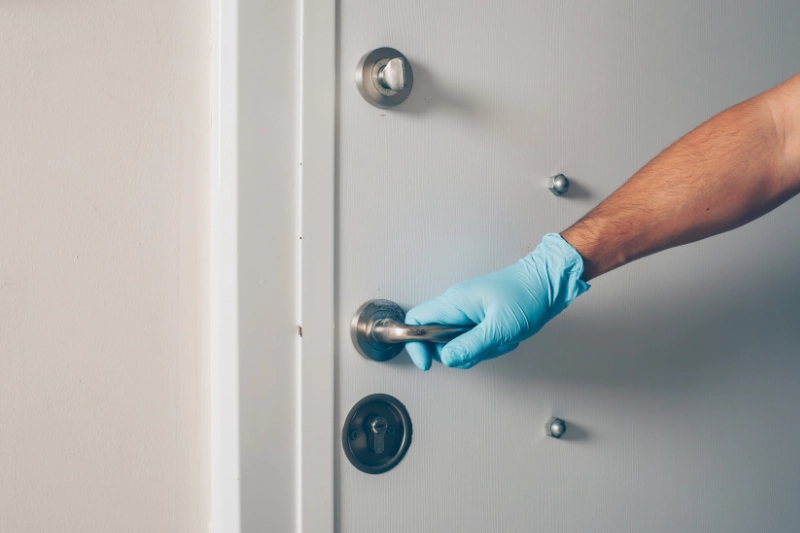
Locked Out of Your House? Here's Exactly What to Do
It happens to almost everyone eventually: the door swings shut, and your keys are still on the kitchen counter. Whether you're standing outside a house in Moreletapark or an apartment in Sunnyside, the next few minutes matter. Here's a calm, step-by-step guide to handling a home lockout in Pretoria or Centurion, plus how to make sure it doesn't happen again.
In this guide:
- Stay calm and check the obvious first
- Don't force the door or window yourself
- Call a locksmith who specialises in home lockouts
- What to do while you wait
- How the lockout is handled depends on your lock type
- After you're back inside
- How to prevent it from happening again
- Locked out with kids, pets, or an alarm counting down?
- Frequently asked questions
Stay Calm and Check the Obvious First
Before calling anyone, do a quick check:
- Is there another door, window, or domestic entrance that might be unlocked?
- Does anyone else — a partner, roommate, landlord, or neighbour with a spare key — have access?
- Is your alarm active? If so, avoid opening any door or window in a way that could trigger a false alarm response before you're ready.
If none of these apply, you're looking at a genuine lockout, and it's time to move to the next step rather than wasting time trying every window in the house.
Don't Force the Door or Window Yourself
It's tempting to try and jimmy a lock open with a card, a coat hanger, or brute force, especially if you've seen it done in a video online. In practice, this usually does one of two things: it damages the lock or door frame (turning a simple lockout into an expensive repair), or it fails completely and leaves you no better off. Modern deadbolts and security gates are specifically designed to resist exactly this kind of improvised entry.
If you're locked out of a security gate or a high-security deadbolt, DIY methods are even less likely to work and more likely to cause damage that a proper residential locksmith would then have to repair before they can even open the lock properly.
Call a Locksmith Who Specialises in Home Lockouts
This is where a dedicated lockout service earns its keep. A locksmith equipped for residential lockouts carries lock-picking tools, bypass tools for various lock brands, and — where necessary — the equipment to drill and immediately replace a lock without leaving your home insecure overnight.
When you call, be ready to confirm:
- Your exact address and the easiest access point for a technician (front gate, complex entrance, etc.)
- Whether you have a security estate or complex that requires visitor registration
- The type of lock or gate you're locked out of, if you know it
- Proof of residence you can show on arrival (an ID, a piece of mail, or a neighbour who can confirm)
A properly run emergency locksmith team will always confirm you're the legitimate occupant before opening anything — this protects you as much as it protects them.
What to Do While You Wait
Once you've called for help, there are a few sensible things to do while you wait for your 24 hour locksmith to arrive:
- Wait in a well-lit, visible area rather than an isolated spot, particularly at night.
- If you're in a security estate, let the access control or security desk know a technician is on the way and needs to be let in.
- Keep your phone charged and nearby in case the technician needs to confirm directions.
- If it's raining or very hot, see if a neighbour can let you wait indoors rather than standing outside for 30+ minutes.
How the Lockout Is Handled Depends on Your Lock Type
Not every lockout is solved the same way, and it helps to know roughly what to expect based on what's keeping you out:
- Standard pin tumbler deadbolts — usually the fastest to resolve, typically opened by picking or a bypass tool within a few minutes, with no damage to the lock.
- High-security cylinders — take longer to pick due to their design, and may occasionally require drilling followed by an on-the-spot replacement to restore full security immediately.
- Security gates — often have a more robust locking mechanism than the door behind them; a technician experienced with gate hardware specifically will avoid unnecessary damage to the frame.
- Electronic and smart locks — if the issue is a dead battery or a software fault rather than a physical lock problem, the fix might be as simple as an emergency power connection rather than any lock manipulation at all.
- Multi-point locking systems (common on newer security doors) — these engage several locking points at once, and require a technician familiar with that specific mechanism to avoid misaligning the whole system.
This is exactly why it helps to tell the locksmith what kind of lock or gate you're dealing with when you call — it lets them bring the right tools the first time, rather than needing a second visit.
After You're Back Inside
Getting the door open is only half the job. Once you're back inside, it's worth asking your locksmith a few follow-up questions:
- Was the lock damaged during entry, and if so, does it need to be replaced immediately?
- Would a spare key, hidden securely or left with a trusted neighbour, make sense going forward?
- Is it time to consider an upgrade, such as a smart lock or a more secure deadbolt?
If your lock was picked or bypassed rather than damaged, that's good news for your wallet, but it's also worth confirming the lock still functions exactly as it should — a rushed entry can sometimes leave a mechanism slightly out of alignment.
How to Prevent It From Happening Again
A few practical habits go a long way:
- Leave a spare key with someone you trust — a family member, close neighbour, or your body corporate, rather than under a mat or flowerpot.
- Consider a keypad or smart lock for your front door, removing the "forgot my keys" problem entirely.
- Get a spare cut proactively through a reliable locksmith rather than waiting for an emergency.
- Save a trusted locksmith's number in your phone before you need it, not while you're standing outside in the dark trying to search for one.
Lockpro Locksmith covers home lockouts across Pretoria, Centurion and Johannesburg, with mobile units already positioned across these areas to keep response times short.
Locked Out With Kids, Pets, or an Alarm Counting Down?
Some lockouts carry extra urgency, and it's worth knowing how to handle the wait when there's more at stake than your own inconvenience:
- Children or pets inside — mention this immediately when you call, as most dispatch teams will prioritise these callouts over a routine lockout.
- Elderly or vulnerable family members inside — the same applies; a locksmith would rather know upfront than discover it on arrival.
- An armed response or alarm system counting down to activation — if you know your alarm code but can't reach the panel, tell the technician; they may be able to prioritise the entry point closest to your alarm panel.
- Perishables or medication inside (less urgent, but still worth mentioning) — helps the dispatcher judge priority against other calls in the queue.
Being specific about what's actually at stake — not just "I'm locked out" — helps any properly run emergency locksmith service allocate the nearest available technician appropriately.
Frequently Asked Questions
Will a locksmith damage my lock to get me back inside?
Not if it can be avoided. Most residential lockouts are resolved through picking or bypass techniques that leave the lock fully functional. Drilling is only used as a last resort on locks that can't otherwise be opened.
How do I know the locksmith arriving is legitimate?
A trustworthy company will confirm the technician's name and vehicle details when you book, and the technician should be willing to show ID on arrival.
What if I'm locked out after hours?
A genuine 24-hour emergency locksmith operates around the clock, including weekends and public holidays, with no difference in response commitment.
Locked Out Right Now?
Don't force the door. Our mobile locksmiths cover Pretoria, Centurion and Johannesburg around the clock.


 Mobile unit, Pretoria